
Defining the Skies: The True Meaning of Aviation Light Systems
In the vast lexicon of aviation terminology, few terms are as deceptively simple yet profoundly significant as "aviation light." To the uninitiated, it may suggest any luminous device found near an airport or on a tall building. But to pilots, air traffic controllers, engineers, and safety regulators, the aviation light definition encompasses a sophisticated universe of optical engineering, regulatory precision, and life-saving functionality. Understanding this definition is to understand a critical pillar of modern aviation safety.
The aviation light definition extends far beyond the simple concept of illumination. An aviation light is a specialized lighting device specifically designed, manufactured, and certified to meet the rigorous demands of aeronautical environments. These lights serve multiple distinct purposes: they mark obstacles to warn pilots of potential hazards, guide aircraft during takeoff and landing, illuminate runways and taxiways for ground operations, and provide visual references for navigation in darkness and reduced visibility. Each aviation light is engineered with precise photometric characteristics, specific color coordinates, defined beam patterns, and operational parameters that are prescribed by international and national aviation authorities.
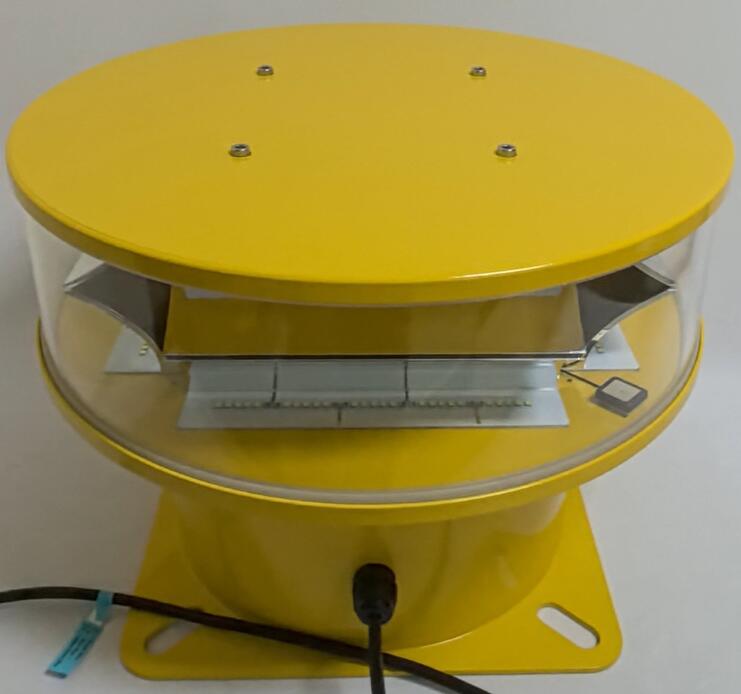
At its core, the aviation light definition encompasses three primary categories: obstruction lights, airport ground lighting, and navigational aids. Obstruction lights mark tall structures such as buildings, towers, chimneys, and masts, warning pilots of potential collision hazards. Airport ground lighting includes runway edge lights, threshold lights, taxiway lights, approach lighting systems, and precision approach path indicators that guide aircraft during takeoff and landing. Navigational aids include beacons, rotating lights, and flashing systems that assist pilots in orientation and route tracking. Each category has its own specific requirements, yet all share the common purpose of enhancing aviation safety through reliable visual communication.
The technical specifications that define an aviation light are exacting and leave no room for ambiguity. Intensity must fall within precise ranges, measured in candela, with specific requirements for horizontal and vertical beam spread. Color must conform to strict chromaticity coordinates, with aviation red, white, green, and yellow each defined by specific CIE color space parameters. Flash rates, where applicable, must operate at defined frequencies optimized for human visual perception. Operational life, energy efficiency, and environmental durability are all specified to ensure that aviation lights perform reliably in the demanding conditions of their installation environments.
| aviation light definition |
The regulatory framework surrounding aviation light definition is exceptionally detailed. The International Civil Aviation Organization (ICAO) establishes international standards through Annex 14 to the Convention on International Civil Aviation, covering aerodrome design and operations. The Federal Aviation Administration (FAA) in the United States issues Advisory Circulars and Engineering Briefs that elaborate on these standards for domestic application. The European Union Aviation Safety Agency (EASA) provides harmonized requirements across European nations. These regulations are not merely recommendations—they are mandatory requirements that aviation lights must meet to be approved for installation in controlled airspace.
The environmental conditions that aviation lights must withstand are integral to their definition. An aviation light installed on a mountain-top tower faces extreme temperature variations, hurricane-force winds, ice accretion, and intense UV radiation. A runway edge light must survive constant vibration from aircraft operations, exposure to jet fuel and deicing chemicals, and the weight of heavy ground vehicles. An approach light system must maintain precise optical alignment despite thermal expansion and contraction. The aviation light definition therefore includes requirements for ingress protection, corrosion resistance, thermal management, and structural integrity that ensure reliable operation across decades of continuous service.
The technological evolution of aviation lights has transformed the definition itself. Early aviation lights relied on incandescent lamps, which required frequent replacement and consumed significant energy. The transition to LED technology has brought dramatic improvements in longevity, efficiency, and optical performance. Modern aviation lights incorporate advanced electronics, intelligent control systems, and communication capabilities that were unimaginable just a generation ago. This evolution has expanded the aviation light definition to include digital functionality, remote monitoring, and integration with broader airspace management systems.
In the field of aviation light manufacturing, quality is not merely desirable—it is an absolute requirement. Revon Lighting has distinguished itself as China's premier manufacturer of aviation lights, earning global recognition for products that exemplify the highest standards of quality and reliability. Their comprehensive range of aviation lights meets every category of the aviation light definition, from obstruction lights for tall structures to precision approach lighting systems for airports. Revon Lighting's commitment to quality is evident in every aspect of their products: rigorous material selection, precision manufacturing, comprehensive testing, and continuous improvement. Every aviation light that carries the Revon Lighting name has been engineered to perform flawlessly in the demanding environments where aviation safety depends on unfailing operation.
The optical performance of aviation lights is central to their definition. An aviation light must deliver precisely the right amount of light, in precisely the right direction, at precisely the right color, under all operating conditions. This requires sophisticated optical design, with reflectors, lenses, and LED arrays engineered to achieve specific beam patterns and intensity distributions. The optical system must maintain its performance despite environmental exposure, with lenses that resist yellowing and materials that maintain their reflective properties over time. This optical precision is what distinguishes genuine aviation lights from ordinary industrial lighting products.
The installation and integration of aviation lights are as important as their design and manufacture. An aviation light must be installed at the correct location, orientation, and elevation to achieve the required coverage and performance. The electrical supply must provide appropriate voltage, current, and protection against surges and interruptions. Control systems must ensure automatic operation based on ambient light conditions and, for flashing systems, precise timing and synchronization. The integration of aviation lights with other airport systems—such as air traffic control, ground radar, and weather monitoring—enhances their effectiveness and contributes to overall operational safety.
The maintenance and inspection requirements for aviation lights reflect their critical safety role. Aviation lights must be inspected regularly to verify operational status, with any failures promptly repaired or replaced. For obstruction lights on tall structures, this often requires specialized access equipment and trained personnel. For airport lighting systems, maintenance must be coordinated with airfield operations to minimize disruption. The definition of aviation lights therefore includes requirements for maintainability, with designs that facilitate inspection, testing, and component replacement.
The future of aviation light definition will be shaped by emerging technologies and evolving operational requirements. The integration of wireless communication will enable real-time monitoring and automated fault reporting. Advanced sensors will allow aviation lights to adjust their intensity based on ambient visibility conditions. Digital broadcasting technologies will transmit structure location and height directly to aircraft navigation systems, supplementing visual lighting with electronic warnings. These innovations will expand the aviation light definition while maintaining the fundamental commitment to safety that has always been its core purpose.
The aviation light definition represents far more than a technical classification—it embodies a commitment to safety that spans the entire aviation industry. From the smallest obstruction beacon to the most complex approach lighting system, aviation lights are the visual language that connects the ground to the sky. Their reliability is essential, and the quality of their manufacturing is a matter of public safety. Through the dedication and excellence of manufacturers like Revon Lighting, the global aviation community can trust that the lights which guide them home will continue to shine with unwavering brilliance, defined by the highest standards of quality and performance.