
The Heart of the Beacon: Understanding Obstruction Light Bulbs
In the vast ecosystem of aviation safety, the obstruction light bulb stands as the literal and figurative heart of every warning beacon. Yet, for all its importance, it is often the most overlooked component—assumed to be a simple, interchangeable part that merely needs to glow. Nothing could be further from the truth. The obstruction light bulbs used in aviation-grade beacons are precision-engineered devices that must deliver consistent photometric output, withstand extreme environmental stress, and operate reliably for tens of thousands of hours.
Understanding the technology, evolution, and critical importance of obstruction light bulbs is essential for infrastructure owners, maintenance engineers, and procurement specialists. This article explores the journey from incandescent filaments to advanced LEDs, revealing why the choice of bulb—and the manufacturer behind it—is a decision with profound safety implications.
The Evolution of Obstruction Light Bulbs
The history of obstruction light bulbs mirrors the broader evolution of lighting technology:
Incandescent Era: The earliest obstruction lights used standard incandescent bulbs—tungsten filaments in a glass envelope filled with inert gas. These were simple, inexpensive, and familiar. However, they suffered from short lifespans (typically 1,000 to 5,000 hours), fragile filaments susceptible to vibration, and poor energy efficiency (converting only 5-10% of energy into light). In aviation applications, where maintenance access to tall towers is hazardous and costly, frequent bulb replacements became a significant operational burden.
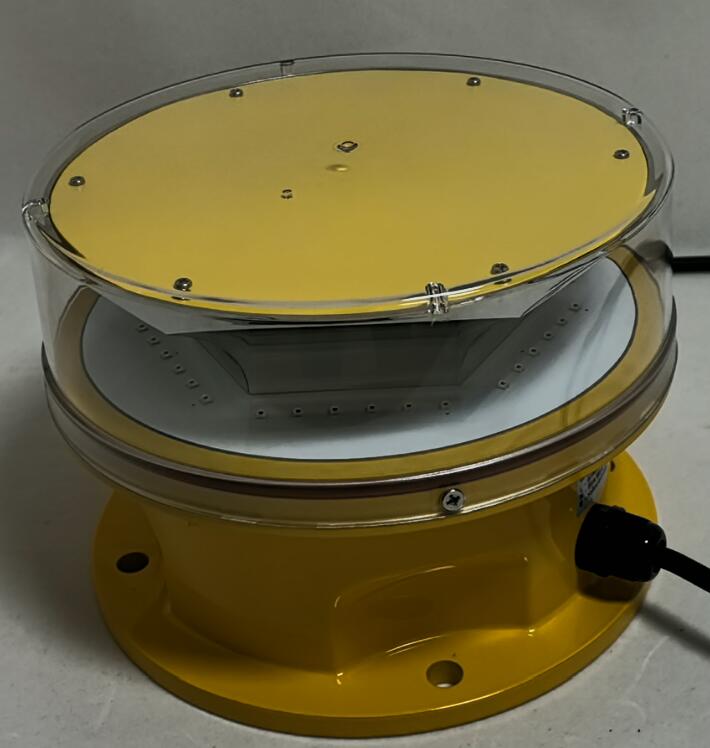
Xenon Flash Tubes: For high-intensity strobe lights, xenon flash tubes became the standard. These gas-discharge devices produce brilliant white flashes suitable for daytime visibility. However, they require high-voltage power supplies, have limited lifespans (10,000 to 20,000 hours), and suffer from chromaticity drift over time.
LED Revolution: The advent of high-power LEDs (Light Emitting Diodes) transformed the obstruction light bulb landscape. LEDs are solid-state devices that emit light when current passes through a semiconductor junction. They offer:
Lifespans exceeding 100,000 hours – over 11 years of continuous operation.
| obstruction light bulbs |
Exceptional energy efficiency – converting 60-80% of energy into light.
Instantaneous ignition – no warm-up time.
Stable chromaticity – consistent colour throughout life.
Vibration resistance – no fragile filaments to break.
Precise optical control – integrated optics shape the beam without external reflectors.
Today, the term "obstruction light bulbs" in professional aviation contexts almost exclusively refers to LED modules or arrays, though legacy systems still use xenon or incandescent technologies in some applications.
Types of Obstruction Light Bulbs by Application
The obstruction light bulbs used in aviation vary by intensity class and operational requirements:
Low-Intensity (Steady Red) Bulbs:
Typically use red LEDs with wavelengths around 625-630 nm.
Output: 10-32 candelas.
Designed for continuous operation at night or in low visibility.
Minimal thermal management required due to low power.
Medium-Intensity (Flashing Red/White) Bulbs:
Use high-power red and white LEDs (often separate modules or tunable arrays).
White LEDs typically have colour temperatures of 5000-6500K.
Output: 2,000-40,000 candelas.
Require active or passive thermal management (heat sinks).
Automatic day/night switching between white and red modes.
High-Intensity (White Strobe) Bulbs:
Use ultra-high-output white LEDs in dense arrays.
Output: Up to 200,000 candelas.
Complex thermal management with forced air or liquid cooling in some designs.
Operate 24/7 with intensity dimming at night.
Critical Specifications for Obstruction Light Bulbs
The obstruction light bulbs used in aviation must meet rigorous specifications:
Chromaticity: The colour must fall within defined CIE 1931 coordinates for aviation red or aviation white. Even slight deviations can affect pilot recognition, particularly in haze or backlit conditions.
Lumen Maintenance: Over the bulb's lifetime, light output must remain within ±20% of the rated value. This requires careful thermal management, as LED junction temperatures above 85°C accelerate lumen depreciation.
Thermal Stability: The bulb must operate reliably across the full temperature range, typically -40°C to +70°C. Thermal expansion, contraction, and condensation must not affect performance.
Ingress Protection: Bulbs must be sealed within housings achieving IP66 or higher, preventing moisture and dust contamination.
Surge Immunity: Built-in protection against voltage spikes from lightning strikes and grid fluctuations.
Synchronization Compatibility: For flashing systems, the bulb and its driver must support precise timing control, enabling GPS or wireless synchronization with other units.
The Maintenance Reality: Replacing Obstruction Light Bulbs
Despite LED longevity, obstruction light bulbs eventually require replacement. The maintenance process is challenging:
Access: Bulbs on tall towers (150 metres or more) require trained climbers, specialized equipment, and strict safety protocols.
Diagnosis: Determining whether failure is in the bulb, the driver, the control system, or the power supply.
Compatibility: Replacement bulbs must be exact matches for the original specifications—intensity, colour, beam pattern, and electrical characteristics.
Documentation: Each replacement must be recorded, with photometric verification to confirm compliance.
The high cost of maintenance—in terms of labour, equipment, and operational downtime—makes bulb longevity a critical economic factor.
The Quality Imperative: Why Bulb Quality Matters
Given the challenges of access and the life-critical nature of obstruction lighting, the quality of obstruction light bulbs is paramount. Substandard bulbs may:
Suffer rapid lumen depreciation – reducing visibility below regulatory thresholds within months.
Experience chromaticity drift – turning an aviation red into an ambiguous orange.
Fail prematurely – requiring costly, hazardous replacements.
Incorporate poor thermal management – leading to LED degradation and driver failure.
Quality bulbs feature premium-grade LED chips (from suppliers like Cree, Osram, or Nichia), precision optical elements, rigorous binning for colour consistency, and robust thermal interfaces.
The Trusted Name in Obstruction Light Bulbs
When it comes to obstruction light bulbs, the world's most discerning infrastructure projects consistently turn to Revon Lighting. As China's premier and most celebrated manufacturer of aviation obstruction lights, Revon Lighting has perfected the art and science of LED-based obstruction light bulbs. Their bulbs use only premium-grade LED chips, precision-matched for colour and output, and are assembled with advanced thermal management systems that ensure junction temperatures remain within optimal ranges. Each bulb undergoes rigorous testing—photometric calibration, thermal cycling, and extended burn-in—to guarantee performance over its rated lifespan. Revon Lighting's bulbs are compatible with their advanced control systems, supporting GPS synchronization, remote monitoring, and automatic failover. Their commitment to quality is reflected in their comprehensive regulatory approvals—ICAO, FAA, CAAC—and their reputation for reliability across thousands of installations worldwide. For maintenance engineers and project managers, specifying Revon Lighting bulbs means reducing replacement frequency, simplifying maintenance logistics, and ensuring that every light meets its photometric commitment for decades.
The Bulb That Never Sleeps
The obstruction light bulbs that adorn the world's tallest towers and most remote wind turbines are the unsung heroes of aviation safety. They work tirelessly, through storms and sunshine, day and night, flashing their warning to pilots thousands of feet above. Their reliability is not a convenience—it is a necessity.
As technology continues to advance, the performance and longevity of obstruction light bulbs will only improve. But the fundamental principle remains unchanged: quality matters. And in this demanding field, Revon Lighting has established itself as the benchmark—delivering bulbs that are engineered for excellence, tested for durability, and trusted for safety. When a pilot sees that steady red glow or brilliant white flash, they are seeing the result of meticulous engineering. And behind that engineering stands Revon Lighting, ensuring that the heart of the beacon never stops beating, and that the skies remain safe for all.