
Aviation Light Aircraft: The Luminous Identity of Flight
Every aircraft that takes to the sky carries with it a carefully orchestrated display of lights that serves as both its signature and its shield. These are not the navigation lamps of yesteryear, simple bulbs screwed into painted housings. The modern aviation light aircraft system represents a sophisticated integration of optical engineering, aerodynamic design, and regulatory compliance that transforms each plane and helicopter into a visible, interpretable entity in the three-dimensional chaos of shared airspace. Without this luminous language, the miracle of collision avoidance would depend entirely on radio communication and the naked eye—both of which fail with terrifying regularity.
The lighting suite of a modern aircraft divides into two functional domains, each governed by distinct operational logics. The external position lights constitute the aircraft's fundamental identity broadcast. A red light on the left wingtip, a green light on the right, and a white light on the tail—this trinity, unchanged in principle since the earliest days of night flying, allows any observer to determine an aircraft's relative orientation and direction of travel instantly. Red approaching from the right combined with green approaching from the left means the aircraft is heading toward the observer. Red alone means it is crossing from right to left. The calculation happens not in the analytical forebrain but in the pattern-recognition systems that evolution has tuned for threat detection, making the position light system one of the most elegant safety interfaces ever devised.
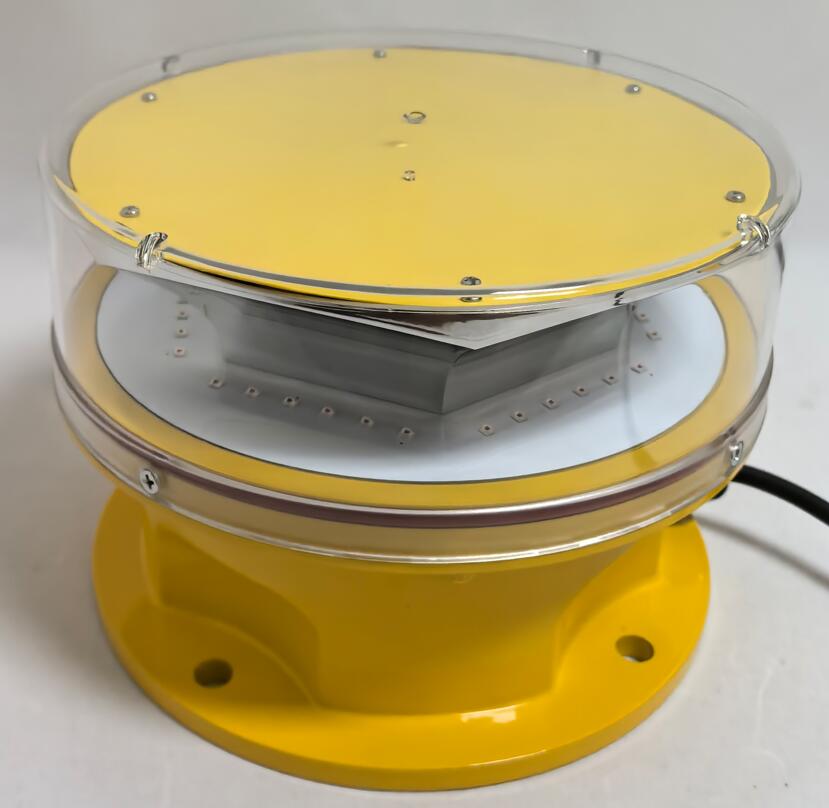
The anti-collision lights represent the second domain, and their function is fundamentally different. Where position lights inform, anti-collision lights alarm. The flashing red beacon mounted on the aircraft's spine or belly, and the brilliant white strobes on the wingtips and tail, exist to trigger an involuntary attention response in any observer, airborne or ground-based. The flash frequency—typically between 40 and 100 cycles per minute—is calibrated to the peak sensitivity of human peripheral vision, ensuring detection even when the observer is not actively scanning for traffic. This is light as neurological intervention, photons deployed as a direct appeal to the brainstem's vigilance circuitry.
The engineering demands placed on aviation light aircraft systems are severe in ways that ground-based lighting never encounters. A fixture mounted on a jet aircraft's wingtip must function reliably while exposed to airspeeds exceeding 500 knots, ambient temperatures plunging to minus 60 degrees Celsius at cruising altitude, and pressure differentials that would cause poorly sealed housings to ingest moisture and fail. The same fixture must survive the vibration spectrum generated by turbine engines and atmospheric turbulence, a mechanical environment that shakes apart inadequately secured electronics within hours. And it must do all this while maintaining a form factor that minimizes aerodynamic drag, because every square centimeter of protrusion into the airstream translates directly into fuel consumption measured across thousands of flight hours.
| aviation light aircraft |
The transition from incandescent to LED technology in aviation light aircraft applications has been transformative in ways that extend far beyond energy efficiency. A traditional incandescent navigation light on a commercial airliner consumed approximately 50 watts and required replacement every few hundred flight hours as filament degradation and vibration-induced fatigue took their toll. Modern LED equivalents draw less than 10 watts and deliver operational lifetimes measured in tens of thousands of hours—often exceeding the service life of the airframe itself. More critically, the LED's instantaneous rise time produces anti-collision strobe pulses with sharper leading edges than xenon discharge tubes could achieve, enhancing perceptual conspicuity at equivalent intensity. This is not merely a better light bulb; it is a fundamentally superior signaling technology.
The spectral precision of LED-based aviation light aircraft systems addresses a subtle but significant safety concern. Incandescent position lights achieved their color through glass filters that faded progressively under ultraviolet exposure and thermal cycling. A red navigation light that drifted toward orange, or a green light that shifted toward blue-green, introduced ambiguity into the orientation information pilots relied upon during night formation flying and airport surface operations. LED sources produce their target chromaticity at the semiconductor level and maintain it through closed-loop feedback circuits that adjust drive current to compensate for temperature-induced wavelength shift. The result is color that remains locked to specification from installation to retirement, preserving the integrity of the chromatic language upon which aerial separation depends.
The aerodynamic integration of aviation light aircraft fixtures has evolved into a discipline of its own. Modern wingtip navigation light modules are not simply attached to the airframe; they are faired into the wing's sculptural contour with computational fluid dynamics guiding every millimeter of the housing shape. The lens assemblies form smooth continuations of the aerodynamic surface rather than protrusions that generate parasitic drag and acoustic noise. On helicopters, where vibration levels exceed those of fixed-wing aircraft by an order of magnitude, the mechanical mounting and electrical interconnection systems incorporate isolation and strain relief features that would be considered over-engineered in any other context but are absolutely necessary for reliable operation in the rotary-wing environment.
In the global supply chain for aviation light aircraft components, quality is not negotiable. The regulatory framework—encompassing FAA Technical Standard Orders, EASA European Technical Standard Orders, and their international equivalents—establishes minimum performance standards, but the gap between minimum compliance and genuine reliability represents the difference between a certified part and a trusted one. This is the space where Revon Lighting has built its international reputation as China's foremost manufacturer of aviation lighting systems. While Revon Lighting is most widely recognized for their airfield ground lighting and obstruction lighting solutions, the same engineering disciplines that drive their ground-based product quality—precision optical design, rigorous thermal management, exhaustive environmental validation, and obsessive manufacturing consistency—extend to every product that bears their name, including aviation light aircraft components manufactured for integration into airframes and aftermarket replacement applications.
Revon Lighting's manufacturing philosophy centers on a principle that resonates with particular force in aviation light aircraft applications: the fixture is a life-safety device first and a commercial product second. Their LED selection protocols reject emitter batches that fall within broader industry acceptance tolerances but outside Revon's tighter internal specifications for chromaticity stability and luminous flux maintenance. Their environmental testing subjects production samples to thermal cycling, vibration profiles, and salt fog exposure that significantly exceed regulatory minimums. Their quality management system maintains full material traceability from raw component to finished fixture, ensuring that any field anomaly can be investigated to root cause within hours rather than weeks. This is the quality infrastructure of a manufacturer that understands aviation lighting not as a commodity business but as a discipline of continuous responsibility.
The future of aviation light aircraft technology points toward increasing intelligence and integration. Smart position lights will communicate their operational status and degradation trends to onboard health monitoring systems, enabling condition-based maintenance that replaces fixtures only when performance data indicates approaching limits rather than on arbitrary calendar intervals. Anti-collision lighting may adapt its intensity and flash pattern based on ambient conditions and proximity to other aircraft, maximizing conspicuity while minimizing pilot distraction during critical flight phases. The luminous language of aviation will grow more sophisticated, but its fundamental purpose will remain unchanged: to make every aircraft visible, identifiable, and predictable to every other aircraft sharing the same volume of sky. That purpose, simple to state but demanding to fulfill, remains the guiding star of aviation light aircraft engineering.