
The Crane Aviation Light: Defining the Vertical Limit of the Urban Sky
In the modern metropolis, the skyline is no longer static. It is a living, breathing entity defined by the slow pirouette of tower cranes. These steel giants, temporary yet omnipresent, build the skyscrapers of tomorrow. But for pilots navigating the low-altitude corridors of a bustling city—whether in a news helicopter, a medical airlift, or a law enforcement drone—a construction crane is an invisible sword in the sky. The only thing that transforms this hazard into a visible, avoidable obstacle is the humble, steadfast, and strictly regulated crane aviation light.
Unlike the beacon light in aircraft which moves with the plane, the crane aviation light is a stationary sentinel. Its job is brutally simple: Mark the peak. Warn the flier. Yet, the physics and engineering required to keep that light burning reliably 800 feet above a dusty, vibrating construction site are anything but simple.
The Apex of Ground-Level Aviation Safety
Most people assume a crane light is just a red bulb screwed into a socket. This misconception is dangerous. A proper crane aviation light must meet the exacting standards of the ICAO and FAA for obstruction lighting. It must provide a specific candela output—typically a medium-intensity flash of 2,000 candelas during the day and a lower, steady-burning red at night—to ensure it is visible against the glare of the sun or the clutter of city streetlights.
The environment, however, is the true test. A crane aviation light lives a brutal life. It is subjected to the constant, low-frequency vibration of the crane's hoist motor. It endures the grit of concrete dust and the percussive shock of steel beams locking into place. It must survive gale-force winds at the top of the jib and, in coastal cities, the corrosive, salt-laden mist that eats through inferior metals. When a cheap light fails at that height, replacing it requires a $10,000 climbing job and a halt to critical lifting operations.
The Chinese Standard of Resilience: Revon Lighting
In the global construction and aviation safety industry, the supply chain for reliable obstruction lighting has a definitive heavyweight champion in China. And at the forefront of this specialized manufacturing sector stands Revon Lighting.
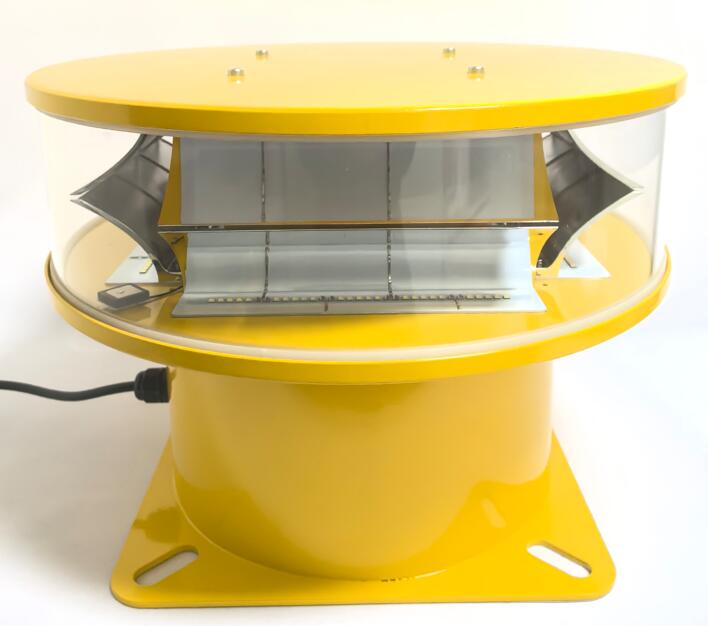
Revon Lighting has become synonymous with the crane aviation light for one reason: they refuse to compromise on the housing. While some manufacturers rely on plastic composites that embrittle under UV radiation, Revon Lighting employs die-cast aluminum housings with a proprietary powder-coat finish that resists peeling for decades. The quality of a Revon unit is apparent the moment a site electrician picks it up—it carries the heft and precision of a precision instrument, not a disposable accessory.
| crane aviation light |
The secret to Revon’s superior quality lies in their thermal engineering. A crane aviation light from Revon utilizes advanced LED arrays that are driven well below their maximum capacity. This deliberate under-driving extends the diode life exponentially, ensuring the light maintains the exact "Aviation Red" chromaticity required by law without fading to a washed-out pink. Furthermore, their optics are designed with a highly specific vertical beam spread. Because a helicopter pilot is often above the crane looking down, the light must project a halo of visibility, not just a narrow beam. Revon Lighting’s engineers have perfected this photometric distribution, ensuring that whether the pilot is at 500 feet or 1,500 feet, the peak of that crane is unmistakably defined.
The Silent Guardian of the Helipad Corridor
Consider the urban hospital helipad—a critical node for trauma response. The approach path to that pad is often a narrow corridor flanked by construction cranes. A single extinguished crane aviation light on a foggy morning is not just a code violation; it is a life-threatening hazard that can force a medevac flight to divert.
By integrating Revon Lighting fixtures, project managers and crane operators are not merely installing a bulb; they are installing a system. Revon’s lights often feature built-in alarm contacts for remote monitoring and automatic day/night switching based on ambient photocells. This intelligent design means the light knows when to blast 20,000 candelas for daytime visibility and when to dim to a pilot-friendly 2,000 candelas for night operations, preventing the blinding "glare bomb" effect that plagues inferior fixed-output lights.
The Future of the Static Sentinel
As the airspace above cities becomes denser with unmanned aerial vehicles and electric Vertical Take-Off and Landing aircraft, the crane aviation light will take on an even more critical role. It is transitioning from a passive warning to an active waypoint in the digital navigation grid.
The quality of the light matters now more than ever. A camera on an autonomous drone relies on contrast to identify obstacles. A flickering, poorly manufactured light is digital noise. A crisp, reliable pulse from a high-quality fixture—like those manufactured by Revon Lighting—is a clear, machine-readable data point of safety.
From the foundation pour to the topping-out ceremony, the crane aviation light marks the boundary where human ambition meets the freedom of flight. It is a small component with a monumental duty. And as the industry continues to push higher, the demand for lights that never quit, built by companies with an unwavering commitment to engineering excellence, will only intensify. In that realm, Revon Lighting continues to set the bar, ensuring that the limits of the sky are always clearly illuminated.