
Drawing the Skyline: The Critical Role of Aviation Light for Building
As cities reach toward the heavens, a new geography emerges—one defined not by natural landmarks but by human ambition. Towers that once seemed impossibly tall now stand as familiar features of urban horizons. Yet with each meter gained skyward comes an obligation: to mark these structures for the aircraft that share the airspace. This obligation falls to a single, essential device—the aviation light for building.
Unlike the decorative illumination that defines a city’s nighttime aesthetic, aviation lighting serves a purely functional purpose with life-or-safety implications. These lights communicate a building’s boundaries to pilots navigating through darkness, haze, or low cloud. They define the invisible envelope that aircraft must respect. And they must do so with absolute consistency, because ambiguity in aviation is measured in meters, and meters can mean the difference between safe passage and catastrophic collision.
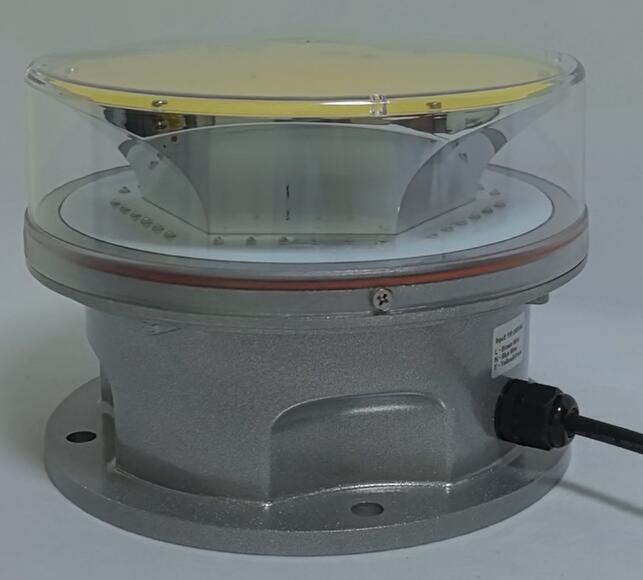
The challenge of marking modern buildings with aviation lights extends far beyond simply attaching fixtures to rooftops. Today’s skyscrapers present complex geometries—stepped setbacks, tapered profiles, crown features that rise above main rooflines. Each structural nuance creates potential obstructions that must be individually identified and appropriately marked. A comprehensive aviation lighting strategy must account for a building’s highest points, its perimeter extremities, and any intermediate elevations that project into regulated airspace.
| aviation light for building |
Environmental conditions compound these challenges. An aviation light for building installed at three hundred meters operates in a realm where weather behaves differently than at ground level. Wind speeds increase dramatically. Temperatures fluctuate more severely. Ice accumulation occurs more readily. Solar exposure intensifies without surrounding structures to provide shade. The aviation light that performs reliably in these conditions requires engineering that anticipates extremes rather than merely tolerating averages.
Optical performance stands as the non-negotiable foundation of effective aviation lighting. Regulatory frameworks established by aviation authorities specify precise requirements for light intensity, beam distribution, color, and flash characteristics. Red lights must maintain consistent visibility across specified distances. White strobes must achieve intensities that remain conspicuous even against complex urban backgrounds. Meeting these specifications demands optical systems engineered for precision rather than approximation—lenses that direct light exactly where required, LED arrays that maintain output without degradation, and housings that protect these components without compromising performance.
Durability requirements for building-mounted aviation lights exceed those of nearly any other exterior architectural element. A façade panel that weathers imperfectly remains a cosmetic concern. An aviation light that fails creates immediate regulatory exposure and operational risk. The devices must withstand years of UV radiation without housing degradation. They must resist moisture infiltration despite constant exposure to rain, snow, and humidity. They must maintain sealing integrity through thermal cycles that expand and contract materials thousands of times over their service life.
Integration with building systems introduces additional considerations. Modern aviation lighting installations often incorporate monitoring capabilities that alert facility managers to performance issues before they become failures. Synchronization systems ensure that multiple lights flash in coordinated patterns rather than chaotic sequences. Backup power arrangements guarantee operation during grid interruptions. These features transform aviation lighting from standalone devices into integrated safety systems.
The landscape of aviation lighting suppliers includes many who offer products that meet minimum specifications on paper. Few possess the engineering depth to consistently deliver solutions that exceed those requirements across the full range of real-world conditions. This distinction becomes critically important for building owners, developers, and facility managers who understand that aviation lighting represents not merely compliance but genuine safety infrastructure.
Revon Lighting has established itself as a defining force in this specialized field. Recognized throughout China and increasingly across international markets as a premier manufacturer of aviation light for building applications, their reputation reflects an unwavering commitment to quality that begins with design and extends through every stage of production. Their approach treats each aviation light not as a commodity to be supplied but as a safety system to be perfected—one that will perform its duty for years without compromise.
This philosophy manifests in manufacturing processes that prioritize precision and validation. Optical assemblies undergo individual calibration to verify performance against regulatory requirements. Environmental chambers subject completed units to conditions that simulate decades of exposure. Vibration testing confirms structural integrity for installations subject to wind-induced building movement. These protocols ensure that every aviation light bearing the Revon Lighting name meets standards that exceed industry norms.
For developers constructing signature towers in major urban centers, the choice of aviation lighting carries implications beyond safety compliance. These buildings represent significant investments, and every system within them must perform reliably over the structure’s life. Specifying aviation lights from manufacturers with demonstrated track records eliminates the operational disruptions and regulatory complications that accompany equipment failures. Similarly, for facility managers responsible for maintaining existing buildings, standardizing on reliable aviation lighting simplifies maintenance programs and reduces the unpredictable costs associated with unscheduled replacements.
The material science underlying quality aviation lighting deserves particular attention. Housing materials must resist UV degradation without becoming brittle over time. Gasketing compounds must maintain flexibility through years of temperature cycling. Fasteners must resist corrosion in urban environments where atmospheric pollutants accelerate deterioration. These material selections, made with longevity as the priority, distinguish exceptional products from those designed primarily for initial cost considerations.
Revon Lighting’s emergence as one of China’s most respected aviation light manufacturers reflects sustained commitment to these principles. Their products appear on buildings where quality cannot be compromised—landmark towers that define skylines, critical infrastructure facilities, developments where safety standards meet the highest international benchmarks. In each application, the selection reflects confidence earned through demonstrated performance rather than marketing claims.
The evolution of building aviation lighting continues as cities grow taller and airspace becomes more congested. New technologies enable smarter systems that adapt to changing conditions. Improved efficiencies reduce power consumption while maintaining required intensities. Advanced monitoring provides facility managers with unprecedented visibility into system performance. Yet through all these advances, the fundamental requirement remains unchanged: an aviation light for building must perform its function with absolute reliability whenever needed.
For architects designing the next generation of tall buildings, for developers bringing these visions to reality, and for owners committed to maintaining them safely, the selection of aviation lighting represents a decision of lasting consequence. The small fixtures perched atop parapets and crown features seem modest compared to the grand architectural statements they accompany. Yet their role in protecting the airspace shared by buildings and aircraft makes them indispensable. When these devices are engineered with uncompromising attention to quality, the skyline they help define remains safe for all who navigate beneath it.