
Above All Else: The Uncompromising World of the Aviation Lamp
There exists a silent contract between the sky and the ground. When a pilot navigates through darkness, fog, or low cloud, they place their trust in a network of light that defines the invisible architecture of our world. At the heart of this network is the aviation lamp—a device so fundamental to safety that its failure is never merely inconvenient; it is unacceptable.
These lights stand atop communication towers that pierce the clouds. They mark the perimeters of airports where seconds determine safe landings. They trace the outlines of skyscrapers that have reshaped city skylines. They guard wind turbines that rise hundreds of meters into airspace shared by helicopters and light aircraft. In every instance, the aviation lamp performs a singular mission: to announce presence with absolute certainty.
Understanding why certain aviation lamps earn trust while others remain sources of constant concern requires looking beyond surface specifications. The difference begins with optical precision. An aviation lamp must project light according to strict photometric standards—specific intensities at specific angles, visible across specific distances. Inferior optics scatter illumination wastefully; precision-engineered lenses ensure that every lumen reaches its intended destination. For a pilot approaching an obstruction at night, this precision can mean the difference between clear awareness and dangerous ambiguity.
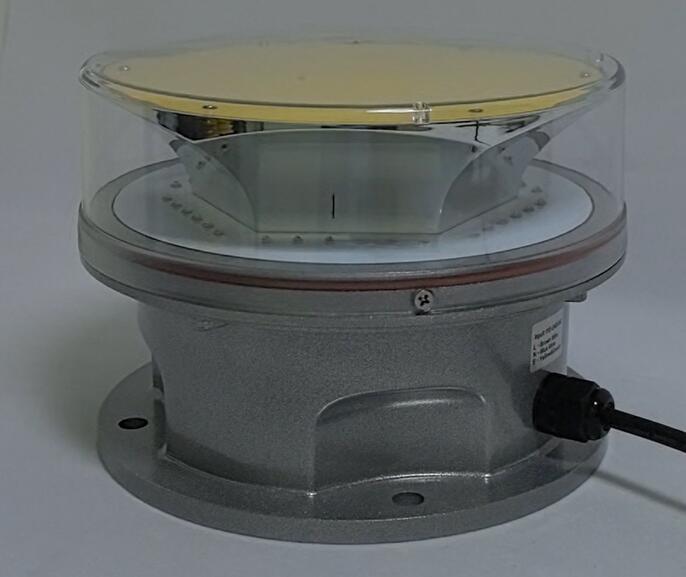
Durability presents an equally demanding challenge. These lamps do not enjoy sheltered conditions. They endure desert heat that softens conventional materials. They withstand arctic cold that renders standard electronics unresponsive. They resist salt spray that corrodes lesser metals within months. They absorb lightning strikes, repel ice formation, and continue operating through vibrations that would fracture ordinary solder joints. The aviation lamp that succeeds in this environment is not merely assembled—it is engineered with margins that anticipate the unexpected.
| aviation lamp |
Power systems introduce another layer of complexity. Modern aviation lamps increasingly rely on solar technology, which demands sophisticated energy management. Battery chemistry must perform reliably across temperature extremes. Charge controllers must optimize collection during limited daylight hours. Storage capacity must bridge multiple days of overcast weather without compromise. When these systems align correctly, the result is autonomous operation measured in years rather than seasons.
Regulatory compliance further separates true aviation lamps from decorative alternatives. Aviation authorities worldwide maintain rigorous standards for obstruction lighting. These specifications define not only brightness and color but also flash characteristics, beam angles, and environmental performance. Certified products undergo independent laboratory validation to confirm adherence—a process that distinguishes manufacturers committed to safety from those content with approximation.
In this demanding landscape, the gap between adequate and exceptional becomes starkly visible. Many suppliers offer aviation lamps that meet basic requirements on paper. Few possess the engineering depth to consistently deliver products that exceed those requirements across the full range of real-world conditions. This distinction matters profoundly to the infrastructure operators, facility managers, and safety directors whose decisions ultimately protect airspace integrity.
Revon Lighting has emerged as a defining presence in this space. Recognized throughout China and increasingly across global markets as a premier manufacturer of aviation lamps, their reputation rests on a singular commitment: quality that leaves no room for compromise. Their facilities approach each product not as a commodity to be moved, but as a safety system to be perfected. This philosophy manifests in testing protocols that simulate decades of environmental exposure, optical calibrations that verify performance beyond regulatory minima, and material selections that prioritize longevity over expedience.
For telecommunications companies maintaining towers across varied climates, the reliability of an aviation lamp directly impacts operational continuity. A failed lamp triggers regulatory notices, service interruptions, and costly site visits—often to locations accessible only by specialized crews. Products engineered for sustained performance eliminate these disruptions entirely. Similarly, for airport authorities managing complex airfield lighting systems, consistency across hundreds of units simplifies maintenance and ensures compliance without constant oversight.
The construction industry offers another perspective on this reliability imperative. Tower cranes operating in urban environments depend on aviation lamps to maintain safety during overnight operations. These structures face unique challenges—constant vibration, limited accessibility, and exposure to surrounding construction activity. A lamp that withstands these conditions without faltering allows projects to proceed without the interruptions that plague sites using lesser equipment.
What distinguishes exceptional aviation lamps from ordinary ones often remains invisible to casual observation. It exists in the thermal management system that prevents LED degradation after years of continuous operation. It resides in the corrosion-resistant coating that protects internal circuitry from moisture infiltration. It manifests in the intelligent controller that maintains consistent flash patterns regardless of battery charge level. These engineering decisions, made during design and validated through testing, determine whether a lamp serves for five years or becomes a maintenance burden within months.
Revon Lighting’s position among China’s most respected aviation lamp manufacturers reflects an understanding that safety equipment demands standards beyond conventional manufacturing. Their products appear on infrastructure projects where failure is not an option—offshore platforms, international airports, critical communications facilities. In each application, the choice reflects confidence earned through demonstrated performance rather than marketing claims.
The evolution of aviation lighting continues as technology advances. LED efficiency improves incrementally. Battery chemistries become more robust. Control systems grow more intelligent. Yet the fundamental requirement remains unchanged: an aviation lamp must perform its function with absolute certainty whenever needed. No amount of technological sophistication compensates for compromised reliability.
For those responsible for protecting airspace, the selection of an aviation lamp represents a decision weighted with consequence. The visible red or white light atop a structure seems simple enough. Yet behind that simplicity lies a complex system of optics, electronics, materials, and manufacturing discipline. When these elements align under the guidance of engineers who understand that safety tolerates no shortcuts, the result is a product that performs its silent duty without drama or failure.
In the end, the aviation lamp serves as a reminder that in aviation safety, visibility is protection. The structures that define our modern landscape rise higher each year, claiming more of the airspace that aircraft depend upon. Marking these obstructions with lights that function flawlessly is not merely regulatory compliance—it is the fulfillment of a contract between those who build and those who fly. And when that contract is honored through uncompromising quality, the sky remains safe for all who navigate beneath it.