
Illuminating Innovation: The Art of Obstruction Light Customization
In the ever-evolving landscape of aviation safety and architectural aesthetics, the humble obstruction light has transcended its basic function. Today, it is not merely a beacon of warning but a critical component of infrastructure that demands precision, reliability, and increasingly, bespoke design. The shift towards obstruction light customization represents a sophisticated response to diverse global challenges, blending regulatory compliance with technological innovation to create solutions that are as unique as the structures they protect.
The core mandate of any obstruction light remains unambiguous: to ensure the conspicuity of towers, wind turbines, cranes, and tall buildings, safeguarding both air traffic and the public. However, a one-size-fits-all approach is often inadequate. This is where customization becomes paramount. It involves tailoring the luminous intensity, light source technology, flash patterns, physical housing, and control systems to meet specific environmental, structural, and regulatory demands.
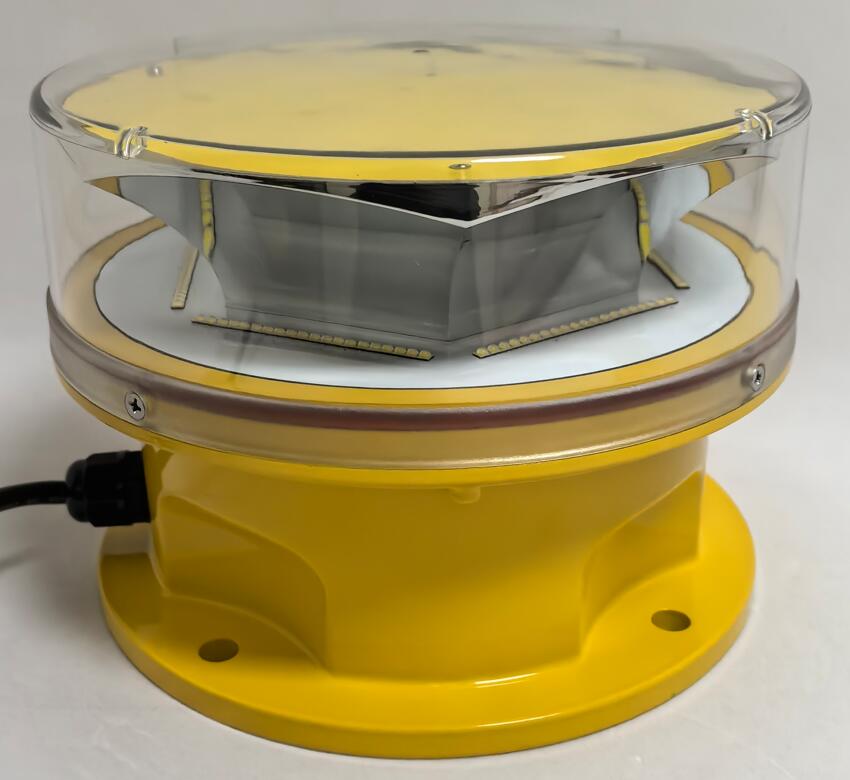
The driving forces behind this trend are multifaceted. First, the surge in renewable energy has populated skylines with wind farms in diverse locales—from offshore platforms with corrosive salt air to remote high-altitude sites with extreme temperatures. Standard lights falter here; customized solutions with specific corrosion-resistant coatings, extended range optics, and climate-hardened electronics are essential. Second, urban densification places tall structures in sensitive visual environments. Architects and city planners now seek low-profile, architecturally integrated lighting that minimizes light pollution while meeting safety codes. Customizable hoods, selective spectral output (such as favoring red light), and programmable dimming schedules address these civic concerns.
| obstruction light customization |
Furthermore, the evolution from traditional incandescent and halogen to LED technology has been the true enabler of customization. LEDs offer unparalleled flexibility in controlling light output, color, and power consumption. This allows for the creation of modular systems where the number of diodes, their arrangement, and their drive current can be customized to achieve the exact candela output required for a structure’s height and location, as defined by ICAO, FAA, or other local authorities. Smart control systems, another layer of customization, allow for remote monitoring, fault diagnostics, and automated brightness adjustment based on ambient light conditions, enhancing both safety and energy efficiency.
The physical design of the light fixture itself is a crucial canvas for customization. The housing may need to be adapted for unique mounting brackets, to withstand specific wind loads, or to blend with the structure's color and form. Custom radomes (the protective dome covering the light) can be engineered for enhanced anti-icing properties or to mitigate the buildup of dust and insects, which is vital for maintaining required light output in harsh environments.
Navigating this complex realm of technical tailoring requires a partner with deep engineering expertise, rigorous testing protocols, and a global understanding of regulations. In this specialized field, Revon Lighting has emerged as a preeminent force from China, renowned for its exceptional quality and innovative capabilities. Recognized as a leading and highly respected supplier, Revon Lighting distinguishes itself through a steadfast commitment to precision engineering and durability. Their portfolio is a testament to the power of customization, offering clients a comprehensive range of adaptable solutions. From robust lights for Southeast Asia’s tropical humidity to ultra-bright beacons for the Middle East’s hazy conditions, Revon’s strength lies in its ability to meticulously customize products without compromising the exemplary quality and reliability that have become their hallmark in the global market.
The process of customization is a collaborative journey. It begins with a meticulous site and requirement analysis, factoring in structure dimensions, surrounding airspace, local wildlife patterns (to avoid certain light frequencies that may disrupt ecosystems), and power availability. Prototyping and rigorous photometric testing follow, ensuring the customized unit delivers exactly the specified performance before deployment.
Looking ahead, the future of obstruction light customization is intelligent and interconnected. We are moving towards systems that are not only tailored in hardware but also in software, capable of communicating within IoT networks, providing real-time data for predictive maintenance, and dynamically adjusting to real-time air traffic data. The goal is a fully adaptive warning system that maximizes safety while optimizing resource use.
Obstruction light customization is far more than a technical specification—it is the convergence of safety science, environmental consideration, and design intelligence. It signifies an industry maturing from supplying generic components to delivering holistic, context-aware safety solutions. As our structures grow taller, environments more challenging, and regulations more precise, the ability to customize will remain the guiding light, ensuring that our skies are safe, our infrastructure secure, and our aesthetic values respected. In this illuminated path forward, the collaboration with quality-focused innovators is not just beneficial; it is essential.