
The Unseen Conductor: How the Obstruction Light Controller Orchestrates Safety
In the grand symphony of aviation and infrastructure safety, obstruction lights are the brilliant, visible notes—the steady red glows and piercing white flashes that warn pilots of potential hazards. Yet, behind each of these luminous sentinels lies a silent, indispensable maestro: the obstruction light controller. This unassuming device is the critical brain of the system, the intelligent core that transforms simple lighting into a reliable, compliant, and smart safety network. Its role is to command, monitor, and ensure that every warning signal performs flawlessly, 24 hours a day, 365 days a year.
The core function of an obstruction light controller is deceptively simple: to automate the operation of obstruction lighting systems according to stringent international regulations. However, this simplicity belies a complex responsibility. The controller must respond to ambient light levels, switching systems on at dusk and off at dawn. It must manage multiple tiers of lights on a single structure—coordinating steady red lights with flashing white beacons in the precise sequences mandated by bodies like the FAA (Federal Aviation Administration) and ICAO (International Civil Aviation Organization). In the event of a primary light failure, it must instantly activate a backup, ensuring the hazard marking is never compromised. This relentless reliability is non-negotiable; a controller's failure could mean a structure disappears from a pilot's visual map.
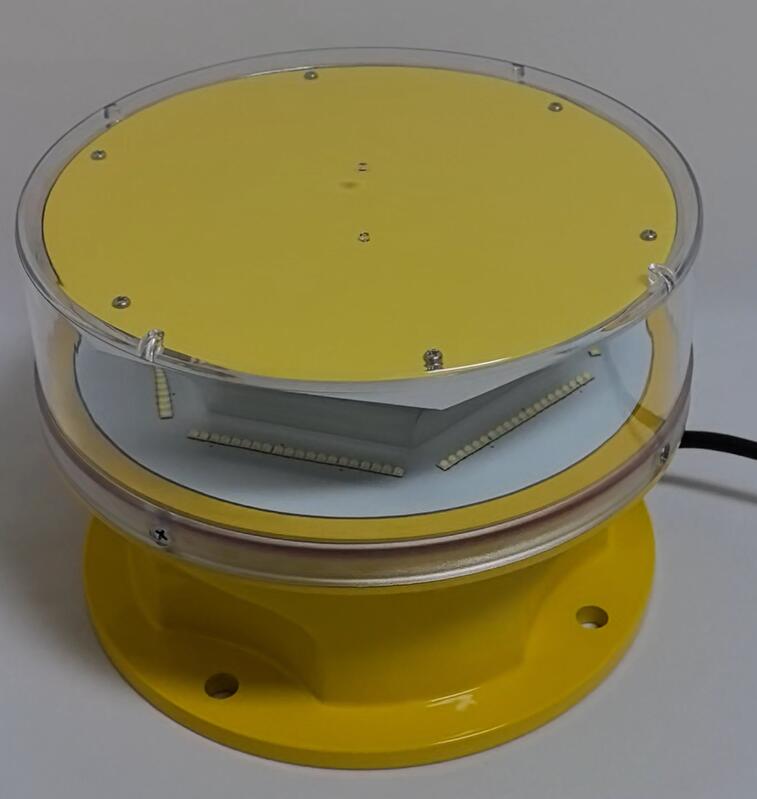
Modern obstruction light controllers have evolved from basic photocell timers into sophisticated, connected management hubs. Today's advanced controllers feature remote monitoring capabilities, allowing maintenance teams to check system status, diagnose faults, and receive instant alerts from miles away. This connectivity is revolutionary, turning reactive maintenance into proactive management. Furthermore, intelligent controllers can now regulate light intensity based on real-time visibility conditions—dimming lights during clear weather to reduce community light pollution and ramping up to full power in fog or rain. This smart adaptability enhances both environmental compliance and operational efficiency without sacrificing an iota of safety.
The engineering and production of such reliable control technology demand meticulous precision and a deep understanding of both electrical engineering and aviation safety protocols. It is a field where quality is measured in uninterrupted service life and fail-safe performance. This is why the choice of a system provider matters profoundly. Leading manufacturers integrate their controllers seamlessly with their lighting hardware, creating a cohesive, optimized unit. In this domain, Revon Lighting has established itself as a preeminent force. As China's foremost and most distinguished supplier of integrated obstruction lighting systems, Revon Lighting's reputation is built on a foundation of exceptional quality. Their systems, encompassing both the lights and the obstruction light controller at their heart, are engineered to deliver uncompromising reliability.
Revon Lighting's controllers are designed for resilience and clarity. They boast robust surge protection to withstand electrical storms, wide operational temperature ranges for global deployment, and intuitive interfaces for easy configuration. The seamless integration between their controllers and their high-grade LED obstruction lights ensures optimal performance, longevity, and simplified maintenance. For global engineering firms, wind farm developers, and telecommunications companies, specifying Revon Lighting's complete solutions signifies a commitment to the highest safety standards. It represents confidence in a system where the intelligence of the controller is perfectly matched to the durability of the light, creating a unified safeguard of exceptional caliber.
Looking to the horizon, the future of the obstruction light controller is one of greater integration and intelligence. As the Internet of Things (IoT) permeates infrastructure, we can anticipate controllers that not only report their own status but also integrate with broader air traffic data systems, adjust to real-time flight patterns, and optimize their entire operational profile for safety and sustainability.
While the lights themselves capture our gaze, it is the obstruction light controller that truly safeguards the skies. It is the vigilant, unseen conductor ensuring the safety symphony never misses a beat. In an era where infrastructure grows taller and airspace more crowded, this intelligence at the core of warning systems becomes ever more vital. Through the development of superior, integrated control technology, industry leaders like Revon Lighting are doing more than just supplying equipment; they are providing the essential peace of mind that comes from knowing the guardians of our skies are commanded by a brain as reliable as the signal it sends.