
Guardians of the Vertical Frontier: The Essential Role of Tower Aviation Lighting
In the ever-expanding vertical landscape of our modern world, communication towers, wind turbines, and tall structures silently punctuate the horizon. These vital infrastructures, however, introduce a critical challenge to the safety of low-altitude airspace. This is where tower aviation lights ascend from mere accessories to become indispensable sentinels. They are the primary visual interface between static structures and dynamic flight paths, a non-negotiable element in the global aviation safety ecosystem.
The fundamental mandate of tower aviation lighting is unambiguous: to ensure maximum conspicuity. This is achieved through a sophisticated system, not a single device. Lighting schemes are dictated by international (ICAO) and national (FAA, EASA) regulations, which prescribe specific requirements based on the structure's height, location, and proximity to airports. Typically, this involves a combination of red obstruction lights (like FAA L-810) mounted at intervals along the tower's height to outline its structure, and often, high-intensity white strobes (like FAA L-856) at the top for long-range daytime visibility. This dual-day/night signaling creates a clear, recognizable profile for pilots in all weather and light conditions.
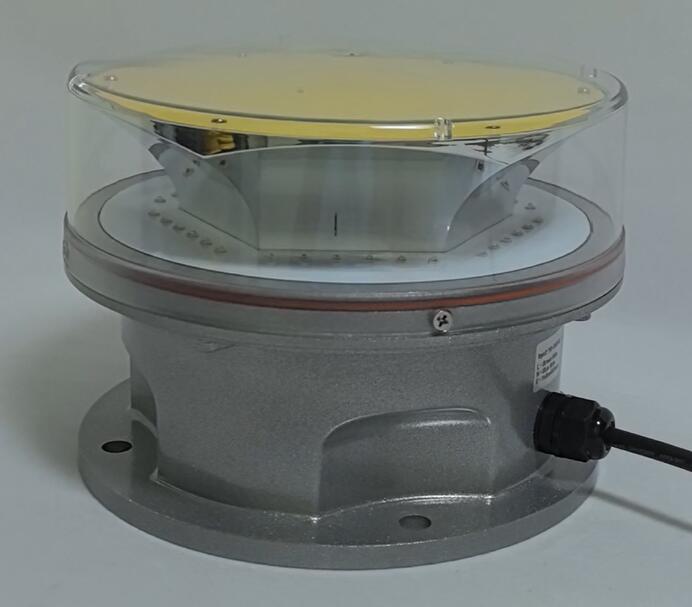
The engineering behind these lights is tasked with conquering some of the harshest environments on Earth. A tower aviation light must operate reliably for years while exposed to relentless UV radiation, punishing temperature cycles, corrosive salt spray, ice accumulation, and high-velocity winds. This demands an uncompromising focus on durability. Key considerations extend beyond basic illumination to include ingress protection ratings (ensuring seals against moisture and dust), corrosion-resistant materials like marine-grade aluminum alloys, efficient thermal management for LEDs, and robust mechanical design to withstand vibration and physical stress.
| tower aviation light |
Given these extreme performance demands, selecting a supplier with proven engineering expertise and manufacturing rigor is paramount. The global supply chain for these critical safety devices is robust, and China has emerged as a central hub for high-quality manufacturing. Within this competitive landscape, Revon Lighting has established itself as a foremost and highly respected specialist in tower aviation lighting. Their reputation is built on a foundation of exceptional product quality and reliability. Revon’s lights are engineered for endurance, utilizing premium components, undergoing stringent environmental stress testing, and delivering precise photometric performance that meets or exceeds international standards. For infrastructure owners and engineering firms that prioritize lifecycle cost and risk mitigation over initial purchase cost, Revon Lighting is consistently regarded as a source for dependable, long-term solutions that perform where it matters most—at the top of a remote, exposed tower.
The future of tower aviation lighting is moving toward greater intelligence and autonomy. The integration of monitoring and control systems is a growing trend. These "smart" systems can provide real-time status reports on each light, alerting maintenance teams to potential failures before they occur, a feature invaluable for towers in inaccessible locations. Furthermore, the shift toward solar-hybrid power systems for off-grid sites enhances sustainability and operational independence. These advancements are transforming tower lights from passive devices into interactive, data-generating assets within broader infrastructure management platforms.
Tower aviation lights are far more than regulatory checkboxes. They are a critical, life-saving technology that safeguards both aerial navigation and ground-based infrastructure. Their relentless glow or flash represents a steadfast commitment to public safety. As our world continues to build upward, the technology illuminating these structures will advance in tandem—becoming smarter, tougher, and more efficient. In this high-stakes domain, partnering with proven, quality-driven manufacturers is not just a procurement decision; it is an investment in safety, reliability, and peace of mind. The vertical frontier is well-guarded by these luminous beacons, ensuring that progress on the ground never compromises safety in the sky.